
How to Choose the Right Aggregate Trailer Mass Rating for Your Caravan’s Hollow Beam Axle Chassis
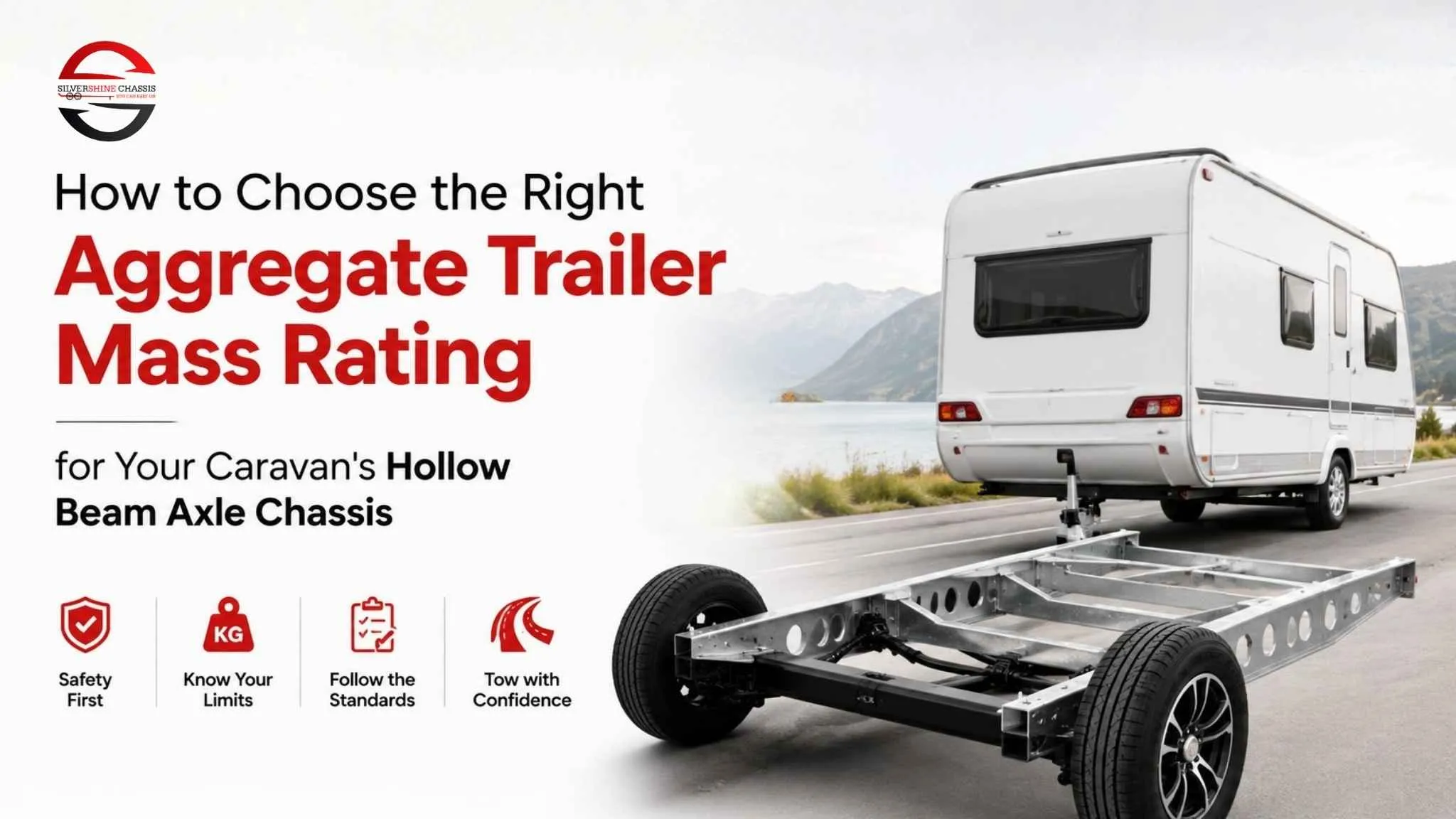
| Choose the right aggregate trailer mass (ATM) rating by calculating your caravan’s fully loaded weight, including water, gas, batteries, gear, and accessories. Add a safety buffer for future upgrades, then select the next suitable chassis tier above that total. Matching your actual load to the correct ATM ensures legal compliance, safer towing, better performance, and longer-lasting chassis components. |
Picking a chassis before you know your aggregate trailer mass requirements is like buying shoes before you’ve measured your feet. Yet it’s one of the most common mistakes owner-builders and first-time buyers make. Get the ATM tier wrong and you’re either paying for capacity you’ll never use, or worse, building a rig that’s illegal to tow the moment you add water, gas and gear. This guide walks you through a simple, practical way to weigh your fit-out first and match it to the right ATM rating for a hollow-beam-axle chassis, so the decision is based on real numbers rather than a guess.
What Is Aggregate Trailer Mass (ATM)?
| Aggregate Trailer Mass (ATM) is the maximum legal weight your caravan can have when fully loaded and standing unhitched. It includes the caravan itself, water, gas bottles, batteries, food, camping gear, and all accessories. The manufacturer sets the ATM rating, and exceeding it is illegal. Choosing the correct ATM helps ensure safe towing, legal compliance, and reliable chassis performance. |
The ATM is the maximum weight your caravan is legally allowed to reach when fully loaded and sitting unhitched on its jockey wheel, everything included: water tanks full, gas bottles on, batteries, solar gear, food, clothing and camping equipment. It’s set by the manufacturer, stamped on the compliance plate, and it cannot legally be exceeded once your caravan is on the road.
It’s easy to confuse ATM with two related figures on the same plate:
- GTM (Gross Trailer Mass) – the weight carried through the axles once the caravan is hitched to your tow vehicle. GTM is always lower than ATM because it excludes the tow ball download, the portion of weight that transfers onto the tow vehicle’s hitch instead of the caravan’s own wheels.
- Tare weight – the caravan’s weight empty, with no water, gas, batteries or gear loaded at all. It’s the starting point for every calculation that follows, but it’s also the number owners most often underestimate, since factory tare figures don’t always reflect optional extras already fitted.
The relationship between all three is straightforward: ATM = GTM + tow ball mass. Every axle, spring, brake and hollow-beam chassis component is engineered as a matched set to a specific ATM tier, which is why the rating has to be locked in before the chassis is built, not adjusted afterward. A chassis rated for 2,900 kg ATM isn’t simply a 3,500 kg chassis running under capacity; the axle diameter, spring rate, brake size and beam thickness are all specified differently at each tier.
Why Getting the ATM Tier Right Matters
| Getting the Aggregate Trailer Mass (ATM) tier right ensures your caravan can safely carry its full load without exceeding legal weight limits. An undersized Aggregate Trailer Mass can lead to overloading, poor braking, and faster component wear, while an oversized ATM adds unnecessary weight and cost. Choosing the correct ATM improves safety, towing performance, compliance, and the long-term durability of your caravan chassis. |
Overloading isn’t a rare edge case; it’s close to the norm. There are now roughly 938,000 caravans and campervans registered in Australia, up around 32% on 2019, and roadside weigh-ins consistently find a large share of them towing overweight, usually without the owner realising it. It rarely happens through recklessness; it happens because water tanks, batteries, solar setups, awnings and general gear quietly add up past the point most owners expect when they first speak to a chassis builder.
An undersized ATM chassis leaves no margin for that creep. Add a second battery, a bigger water tank, or a generator later in the van’s life, and you can tip over the rated limit without realising it. An oversized chassis, on the other hand, adds unnecessary tare weight, manufacturing cost, and towing strain for capacity you’ll never actually use. Heavier axles and springs mean a harsher unladen ride and reduced payload margin on your tow vehicle’s own GVM.
Either way, it’s a legal issue as well as a safety one. Axles, brakes and suspension on a hollow beam chassis are all rated to work together at a specific ATM, and running over that figure puts real strain on components that weren’t designed to carry it increased stopping distances, faster tyre and bearing wear, and reduced sway control at highway speed are common consequences of towing above a chassis’s rated capacity.
Matching Fit-Out to a Chassis Tier
A hollow-beam axle chassis is typically available across a spread of ATM tiers, and the right choice depends entirely on what you plan to load, not just the caravan’s physical size. As a general guide:
- Smaller pop-tops and camper trailers with modest water and battery capacity often sit comfortably in the 2,200–2,500 kg ATM range.
- Mid-size family tourers with dual water tanks, solar and a reasonable battery bank typically need 2,900–3,200 kg.
- Larger tourers and off-road-capable vans with generous water capacity, dual batteries, and heavier fit-outs usually call for 3,500 kg or above.
- Bigger fifth-wheelers and heavily equipped tandem-axle builds can require 4.5-tonne dual-axle configurations.
These bands are a starting point, not a rule. Two vans of identical length can sit in completely different tiers depending on how they’re fitted out. This is exactly why weighing your actual load-out, rather than assuming from the floor plan, is the step so many builds skip.
How the SilverShine Chassis Helps
Our hollow-beam axle chassis range is built in tiers from 2,200 kg through to 4.5-tonne dual-axle configurations, so you’re choosing a genuine ATM rating rather than approximating one. Every chassis leaves our Campbellfield workshop 100% Australian steel (BlueScope and Orrcon), ADR62 compliant and CTA approved, backed by a 5-year structural warranty.
If your build doesn’t sit neatly on a standard tier, our team can specify a custom-made chassis around your exact ATM target rather than forcing you to round up to the next off-the-shelf rating, which often means paying for weight and capacity you won’t use. With 1-week standard delivery and a 24-hour turnaround for urgent orders, you’re not left waiting on a build to move your project forward once the numbers are settled.
A Practical Way to Choose Your ATM Rating
- Weigh the empty shell or tare weight first – If you’re owner-building, get an accurate figure from your builder or a certified weighbridge rather than estimating from a spec sheet, since factory tare figures can miss extras already fitted.
- List every item you’ll load – Full water tanks (water weighs 1kg per litre, so a 300L tank alone adds 300kg), gas bottles, batteries, solar, awnings, tools, and everyday gear. Add the full total to your tare weight.
- Add tow ball mass – it typically 8–12% of ATM, since it’s part of the total that both the chassis and your tow vehicle’s coupling need to handle, even though it technically transfers onto the tow vehicle rather than the caravan’s axles.
- Build in a buffer – Don’t design to the exact number you calculate today; leave headroom for the additions most owners make within the first year or two, like an extra battery, solar panel, or bigger water tank.
- Match to the nearest chassis tier above your buffered total – it’s not the tier closest to your bare tare weight. Rounding down to save cost is the single most common ATM mistake we see.
- Re-weigh once loaded – A certified weighbridge check after your first full pack-out confirms you’re within the plated ATM before you hit the road, and it’s worth repeating any time you make a significant change to your fit-out.
This sequence: weigh, list, add margin, then match the tier – avoids the two most common errors: under-specifying because the “empty” weight looked fine and over-specifying out of caution without knowing the real number either way.
Conclusion:
Choosing the right aggregate trailer mass rating comes down to one habit: weigh your actual fit-out before you pick a chassis tier, not after. Get that sequence right, and everything downstream axles, brakes, suspension, and legal compliance falls into place, and you avoid both the risk of overloading and the cost of overbuilding. If you’re planning a build or upgrade in Melbourne, Victoria, Australia, and want help matching the right hollow-beam axle chassis to your ATM target, book a chassis consultation with our team.
Frequently Asked Questions:
2. How do I calculate my caravan's aggregate trailer mass?
Start with your caravan's tare weight. Then add the weight of water, gas bottles, batteries, food, clothes, camping gear, and accessories. Include a small safety buffer for future upgrades. The final total helps you choose the correct ATM rating and ensures your caravan stays safe and within legal limits.
3. Can I increase my caravan's ATM after it is built?
Sometimes you can, but it depends on your caravan's chassis, axles, brakes, suspension, and legal approval. Upgrading the ATM usually requires stronger components and engineering certification. It is much easier and often cheaper to choose the correct ATM before building your caravan.
4. What happens if I exceed my caravan's ATM?
Exceeding your caravan's ATM is illegal and can make towing unsafe. It increases braking distance, puts extra stress on the chassis, tyres, and suspension, and can reduce vehicle control. Overloading may also affect insurance claims and lead to fines during roadside inspections.
5. How much safety margin should I allow when choosing an ATM?
It is a good idea to leave extra capacity above your current loaded weight. This allows room for future additions like extra batteries, solar panels, water tanks, or camping gear. A small safety margin helps prevent overloading and keeps your caravan legal as your travel needs change.
6. Does caravan size decide the right ATM rating?
No. Two caravans of the same size can have very different ATM ratings because of their equipment and load. Water tanks, batteries, solar systems, appliances, and camping gear all affect the final weight. Always calculate the fully loaded weight instead of choosing an ATM based only on size.
7. Why should I weigh my caravan before choosing a chassis?
Weighing your caravan gives you the true loaded weight instead of relying on estimates. This helps you choose the correct ATM-rated chassis, avoid paying for unnecessary capacity, and prevent overloading. Accurate weight information improves safety, towing performance, and legal compliance on Australian roads.