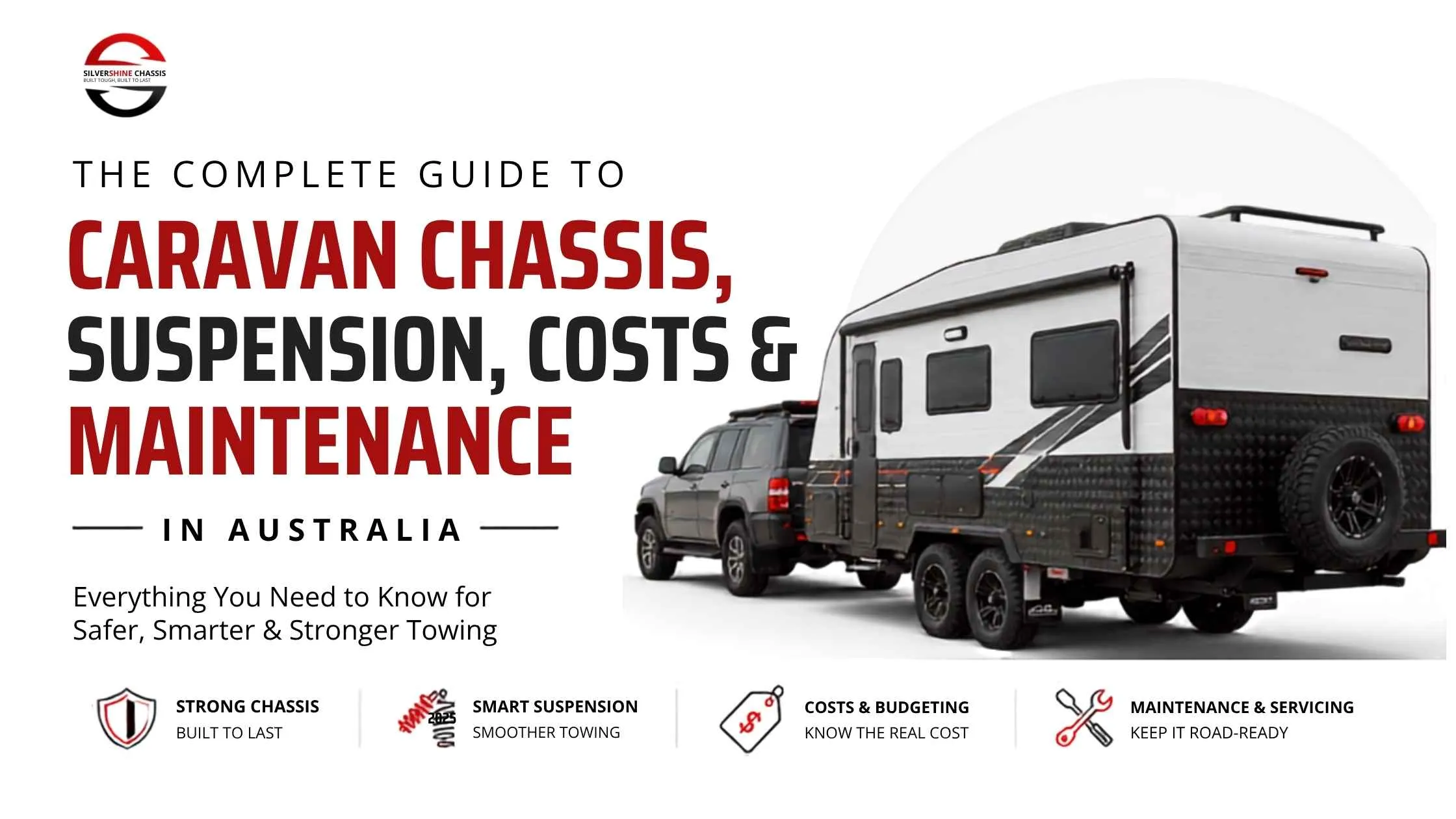
The Complete Guide to Caravan Chassis, Suspension, Costs & Maintenance in Australia
 Buying a caravan is a significant investment, and choosing the right chassis is one of the most important decisions you’ll make. More Australians are hitting the road every year, whether for weekend camping trips or full laps around the country. With rising fuel prices, tougher off-road conditions, and increasing caravan costs, selecting the right chassis is more important than ever. The chassis is the foundation of your caravan. It supports the entire structure, affects towing stability, safety, load capacity, and long-term durability. Choosing the wrong chassis can lead to costly repairs, poor handling, and reduced resale value. In this Australian caravan chassis guide, you’ll learn everything you need to know about caravan chassis, suspension types, galvanised vs painted chassis, servicing schedules, ownership costs, maintenance tips, and how to choose the right setup for your travel style.
Why the Caravan Chassis Is the Foundation of Every Safe Caravan
Think of the chassis as the skeleton of your caravan. It’s the steel frame that sits underneath everything your walls, floor, axles, and suspension all bolt onto it. Without a strong chassis, none of those other parts can do their job properly. A well-built chassis spreads the weight of your caravan evenly across the axles. This keeps the caravan stable when you’re towing. It also reduces the chance of swaying or fishtailing on the highway, which is one of the most dangerous things that can happen while towing. Over time, your chassis endures significant stress from potholes, corrugated roads, uneven terrain, and creek crossings. A poorly designed or low-quality frame can crack, bend, or develop rust, leading to costly repairs and potential safety risks. This is why many caravan owners choose locally manufactured chassis built to Australian standards, prioritising durability, high-quality steel, and expert craftsmanship. If you’re considering the benefits of locally built frames, our guide on Australian-made caravan chassis in 2026 explains why more manufacturers are choosing quality over cost and how it can improve your caravan’s long-term performance and reliability.
Choosing the Right Caravan Chassis
Not all chassis are built the same way. The right one for you depends on where you plan to travel. On-road chassis are designed for sealed roads and smooth surfaces. They’re lighter and work well for caravan parks and highway touring. A semi off-road chassis can handle gravel roads and light bush tracks. They’re a good middle ground for people who want some adventure without going fully remote. Full off-road chassis are built for serious travel, river crossings, rocky tracks, and deep corrugations. They use heavier steel, better welds, and stronger suspension mounts. When comparing chassis options, look at these key specs:
- ATM (Aggregate Trailer Mass): The maximum loaded weight of your caravan
- GTM (Gross Trailer Mass): The weight on the axles when hitched
- Steel thickness: Heavier gauge steel means better strength
- Wheel track width: A wider track improves stability
- Weight: Lighter isn’t always better. Balance strength with weight
Choosing the right chassis is one of the most important decisions you’ll make before purchasing or building a caravan. Factors such as your travel style, towing vehicle, intended terrain, and load capacity all play a role in selecting the most suitable design. If you’re unsure which option best suits your needs, our comprehensive guide on choosing the right off-road chassis for your caravan explains the key features to compare and what to look for before making your investment.
Galvanised vs Painted Chassis, Which Lasts Longer?
One of the biggest decisions you’ll make is whether to choose a galvanised or painted chassis.
| Feature | Galvanised Chassis | Painted Chassis |
| Rust Protection | Excellent | Moderate |
| Corrosion Resistance | High | Lower |
| Lifespan | 20+ Years | Shorter |
| Maintenance | Low | Higher |
| Upfront Cost | Higher | Lower |
| Best For | Coastal & Off-road Travel | Budget On-road Use |
| Resale Value | Higher | Lower |
A painted chassis might look great in the showroom, but it chips and scratches over time. Once the bare steel is exposed to moisture and air, rust starts to form. In Australia’s harsh climate, from coastal salt air to tropical wet seasons, this can become a serious problem. A galvanised chassis is coated with a layer of zinc, either by hot-dip galvanising or by other treatments. This zinc coating acts as a barrier against rust and corrosion. Even if the surface gets scratched, the zinc continues to protect the steel underneath. Benefits of a galvanised chassis include:
- Stronger resistance to rust and moisture
- Longer lifespan, often 20+ years with proper care
- Less maintenance is needed over time
- Better resale value when you sell
For most Australian caravan owners, the additional upfront investment in a galvanised chassis is well worth it, particularly if you plan to travel frequently or explore challenging environments.
Understanding Caravan Suspension Systems
Your caravan’s suspension system sits between the chassis and the road, absorbing bumps, reducing vibration, and helping to keep your tyres in constant contact with the ground. A well-designed suspension system not only improves ride comfort but also protects the chassis, furniture, and other components from unnecessary stress. Choosing the right suspension can make a significant difference to towing stability, safety, and overall performance, especially when travelling across Australia’s diverse road conditions. Here are the main types of caravan suspension: Leaf spring suspension is the most common and cost-effective option. It’s known for its simplicity, durability, and ease of maintenance, making it suitable for sealed roads and light off-road use. However, it can provide a firmer ride on corrugated roads and offers limited wheel articulation on uneven terrain. Coil spring suspension delivers a smoother and more comfortable ride than traditional leaf springs. Although less common on caravans, it’s a good option for travellers who regularly drive on gravel roads or moderately challenging tracks. Independent suspension allows each wheel to move independently, so a bump on one side doesn’t affect the other. This results in better tyre contact with the ground, improved handling, reduced stress on the chassis, and greater stability on rough terrain. It’s one of the preferred choices for serious off-road touring. To better understand how this system performs over time and how to keep it in top condition, read our guide on Cruisemaster independent suspension maintenance tips Airbag suspension uses adjustable air pressure to control ride height and suspension firmness, allowing you to fine-tune the setup based on your caravan’s load. It offers excellent ride comfort, improved towing stability, and better weight distribution, making it an ideal choice for heavier caravans and long-distance travel. If you’re deciding between suspension options, our comparison of airbag suspension versus traditional caravan suspension explains the advantages, limitations, and best use cases for each system.
How Much Does a Caravan Cost in Australia?
Caravan prices in Australia vary widely. In 2026, basic on-road models start around $30,000–$40,000, mid-range semi off-road caravans cost $60,000–$90,000, and premium full off-road setups can exceed $120,000. For a detailed breakdown, see how much a caravan costs in 2026.
- Registration and insurance: Ongoing yearly costs
- Servicing: Regular maintenance keeps your caravan safe
- Fuel: Towing increases your vehicle’s fuel use significantly
- Accessories: Solar panels, water tanks, annex, fridge these add up fast
- Storage: If you don’t have space at home, off-site storage costs extra
- Repairs: Even a well-built caravan will need repairs over time
Understanding the total cost of ownership helps you avoid nasty surprises and plan your budget properly.
How Often Should a Caravan Be Serviced?
Regular servicing is one of the best things you can do to protect your caravan and your safety on the road. Many caravan owners skip services to save money and end up paying far more in repairs later. Recommended servicing schedule:
- Before every trip: Check tyre pressure, lights, brakes, hitch, and jockey wheel
- Every 10,000 km or annually (whichever comes first): Full wheel bearing inspection, brake adjustment, suspension check, and chassis inspection
- Every 2–3 years: More detailed chassis inspection for cracks, rust, and weld integrity
During a service, a qualified technician will inspect:
- Wheel bearings (worn bearings are a leading cause of wheel loss on the road)
- Brake shoes, cables, and electric brake controllers
- Suspension bushes, shackles, and mounts
- Chassis welds and crossmembers
- Tyres for wear and age (tyres degrade even if they look fine)
- Rust prevention treatments
Don’t skip servicing. It protects your investment and keeps you safe.
Fuel Efficiency Tips When Towing
Towing a caravan adds significant weight and drag to your vehicle. Fuel costs can easily double or triple compared to driving alone. With Australia’s ongoing fuel price pressures, it pays to tow efficiently. Simple habits that save fuel:
- Check tyre pressure regularly: Under-inflated tyres increase rolling resistance and fuel use
- Distribute weight evenly: A well-loaded caravan reduces towing effort
- Keep your speed under 100 km/h: Wind drag increases dramatically above this speed
- Use cruise control on flat roads: Steady speeds use less fuel than constant accelerating and braking
- Service your vehicle regularly: A clean air filter and fresh oil help fuel efficiency
- Reduce drag: Lower your caravan’s front profile where possible and remove roof racks you don’t need
These small changes can save hundreds of dollars on a long trip.
Can You Legally Live in a Caravan in Australia?
More Australians are choosing to live in their caravan full-time. It can be a cost-effective lifestyle but it does come with legal responsibilities that vary by state and council. Here’s a general overview:
- Holiday parks and caravan parks: Most allow long-term stays, though rules on continuous duration apply in some states
- Private land: You may be able to live in a caravan on private land with the owner’s permission, but local council zoning laws apply
- Crown land and national parks: Short-term stays are usually permitted; permanent stays are not
- Council rules: Each local government area has different rules about where a caravan can be parked and used as a dwelling
Living in a caravan full-time is possible but requires research into the laws that apply in your area. Breaching council rules can result in fines or being asked to move on.
Choosing the Right Trailer for Your Adventure
Not everyone needs a full caravan. Depending on how you travel, a purpose-built trailer might be a better fit. Camping trailers are compact and affordable. They’re great for weekend trips and fold-out tent setups. Utility trailers are workhorses ideal for carrying gear, bikes, or equipment alongside your caravan. Off-road trailers are built for serious bush camping. They carry water, solar gear, and supplies without needing full caravan amenities. Hybrid trailers are really cool because they have a shell on the bottom and tent parts that fold out. This means you get to be more comfortable than you would in a trailer, and it is not as heavy as a big caravan. The right trailer depends on how often you travel, the type of terrain you plan to explore, your towing vehicle, and the level of comfort you want while camping. If you’re comparing different trailer styles for your next adventure, our guide on top trailer ideas for camping adventures explores the best options to help you choose the right setup for your needs.
Caravan Maintenance Checklist
Use this as a quick reference to stay on top of your caravan’s health. Before every trip:
- Tyre pressure (including spare)
- Lights indicators, brake lights, reversing
- Hitch, safety chains, and breakaway cable
- Brake controller settings
- Load balance and tie-downs
Every 10,000 km or annually:
- Wheel bearing repack or inspection
- Brake adjustment and shoe inspection
- Suspension bushes and mounts
- Chassis and weld inspection
- Rust treatment where needed
- Water system flush
Annual or as needed:
- Full electrical system check
- Gas fittings and regulator
- Roof seals and window seals
- Tyre replacement if over 5–7 years old
- Chassis corrosion inspection
Keeping a logbook of your caravan’s service history also helps when it comes time to sell.
Common Mistakes Caravan Owners Make
Learning from others’ mistakes saves time and money. Here are the most common ones: Buying on price alone. A cheap caravan with a weak chassis will cost you more in repairs over time. Look at quality, not just price. Skipping regular servicing. Wheel bearing failures and brake faults are preventable. Don’t wait until something breaks. Overloading. Exceeding your ATM is illegal and dangerous. Know your limits and weigh your load. Choosing the wrong suspension. Leaf springs on a rough off-road track will punish both the caravan and your belongings. Match your suspension to your travel plans. Poor towing setup. A weight distribution hitch and sway control system are worth every dollar on long highway stretches. Ignoring chassis inspections. A crack in a weld or early rust can be fixed cheaply if caught early. Left too long, it can mean full chassis replacement.
Why Australian-Made Caravan Chassis Are Worth It
When you buy an Australian-made chassis, you’re not just buying steel you’re buying expertise, compliance, and long-term support. Local manufacturers build to Australian Design Rules (ADR), which means the chassis meets the safety standards required for Australian roads and conditions. They understand our climate, our roads, and what it takes to tow safely across thousands of kilometres of outback. Australian-made chassis also tend to use better quality steel and welding practices. And when you need a warranty claim or a replacement part, support is local not overseas. In the long run, buying Australian-made is often the smarter financial decision, even if the upfront cost is slightly higher.
Conclusion
A caravan’s performance depends on more than its looks. The right chassis, the right suspension, regular servicing, and smart buying decisions all add up to safer towing, lower running costs, and a longer-lasting investment. Whether you’re buying your first caravan or upgrading for serious off-road adventures, understanding these fundamentals will help you make choices you won’t regret. The road is better when your setup is right. Silvershine Chassis Australia’s trusted caravan and trailer chassis manufacturer. Contact us for a custom chassis quote or expert advice.
Frequently Asked Questions:
2: How do I know if I need an off-road or on-road caravan chassis?
Think about where you'll travel most. If you stick to sealed roads and caravan parks, an on-road chassis is fine. If you plan to travel on gravel roads and outback tracks, a semi off-road or full off-road chassis is a better fit. Full off-road chassis use heavier steel, stronger welds, and better suspension mounts to handle the punishment of remote Australian terrain. Always match your chassis to your travel plans.
3: Is a galvanised chassis really worth the extra cost?
Yes, in most cases. A galvanised chassis resists rust and corrosion far better than a painted one. In Australia's harsh climate, coastal salt air, tropical rain, dusty outback, a painted chassis can start to rust within a few years. Galvanising protects the steel underneath even when scratched. Over the life of the caravan, a galvanised chassis usually costs less in maintenance and holds better resale value.
4: How often should I service my caravan?
You should do a basic check before every trip tyres, lights, brakes, and hitch. A full service should happen every 10,000 km or at least once a year, whichever comes first. During a full service, a technician will inspect wheel bearings, brakes, suspension, and the chassis itself. Regular servicing prevents small issues from becoming expensive repairs and keeps your caravan safe and legal on the road.
5: What type of caravan suspension is best for rough Australian roads?
Independent suspension is one of the best choices for off-road travel in Australia. It lets each wheel move separately, which reduces the amount of shock transferred to the chassis and the caravan's body. Airbag suspension is also excellent for heavy caravans or long trips, as it absorbs bumps smoothly and can be adjusted for different loads. Leaf springs work well on smooth roads but can be uncomfortable and harder on the chassis off-road.
6: Can I live in a caravan full-time in Australia?
Yes, but the rules depend on where you are. Living in a caravan on private land is possible in some areas, but local council zoning laws apply. Caravan parks allow long-term stays under certain conditions. Crown land allows short-term stays only. Each state and local council has its own rules, so it's important to research the laws in your specific area before committing to full-time caravan living to avoid fines or being asked to relocate.
7: Why should I buy an Australian-made caravan chassis instead of an imported one?
Australian-made chassis are built to meet Australian Design Rules (ADR) and are designed for local road conditions and climate. Local manufacturers understand the demands of towing across outback roads, coastal environments, and long distances. You also get local warranty support and easier access to replacement parts. While imported chassis may be cheaper upfront, the long-term costs of repairs, compliance issues, and limited support can far outweigh the initial savings.